
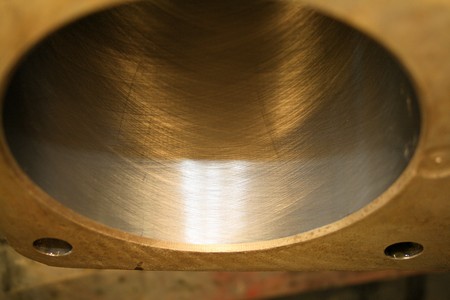
So I've watched all the videos and searched the forum and maybe have missed this one but I am wondering the correct procedure for prepping a cylinder for fresh rings. The cylinder hone itself is in excellent condition but I have recently had this motor apart and long story short, before sealing it all up with new gaskets I want to throw in a new piston. So hone is perfect but since it is not a new hone the rings will not seat properly if not prepped correctly = blow-by. Anyway some expert advice here would be great.
prepping cylinder for new rings
- Thread starter PikledBeats
- Start date
You are using an out of date browser. It may not display this or other websites correctly.
You should upgrade or use an alternative browser.
You should upgrade or use an alternative browser.

as far as i know for new rings a fresh hone (if the cylinder is in spec) and new rings is all you need i would just take it somewhere and have them hone it
as far as i know for new rings a fresh hone (if the cylinder is in spec) and new rings is all you need i would just take it somewhere and have them hone it
Thats the thing I have a good hone, brand new piston, new rings to match hone. No point paying for honee I dont need, just need it prepped so rings seat properly. For lack of a better word it looks "glazed" over. I have heard that this can just be cleaned/prepped. Everything piston/rings is already matched to hone as it was perfect, It had a piston run in it for probably five hours. When taking it apart recently, I decided I'd switch out the cast piston that was in it for a new forged one. I don't want to hone it when it does not need it and Everything is already measured etc. for current hone
Last edited:
well im not sure how to help you the only way i know of how to get rid of the glaze is hone but il bump it up for ya so it doesnt get burried

If you want your rings to seat properly and they already havent seated properly after 5 hours on a fresh hone something is wrong.
However, the only way to fix your problem is just to rehone it. I dont know why youre so averse to doing it. You can buy the honing device and do it yourself with a drill. It isnt that big of a deal IMO.
Just rehone it and rebreak it in. Thats what Id do.
However, the only way to fix your problem is just to rehone it. I dont know why youre so averse to doing it. You can buy the honing device and do it yourself with a drill. It isnt that big of a deal IMO.
Just rehone it and rebreak it in. Thats what Id do.

Blaner
Your Friendly South African Ambassador
Ken also recommends cleaning the cylinder with dishwashing liquid, put a tad onto a paper towel and wipe the bore perpendicular to the stroke, ie, dont wipe up and down, wipe across. this will get rid of the small bits of dirt that you dont see with your eye. search for the installing a cylinder video/sticky somewhere
If you want your rings to seat properly and they already havent seated properly after 5 hours on a fresh hone something is wrong.
However, the only way to fix your problem is just to rehone it. I dont know why youre so averse to doing it. You can buy the honing device and do it yourself with a drill. It isnt that big of a deal IMO.
Just rehone it and rebreak it in. Thats what Id do.
Ok, so everyone missed the point, It is not that my previous rings did not sit properly, it is that I am switching out my cast to a forged piston because I have my motor torn down for other things. Anyway I got my answer they make a tool called a flex hone that is a 240 grit and deglazes the cylinder to prep it for rings. My understanding is that it is not a traditional hone per say. My local machinist hit it this morn in about five minutes and now I am following kens cleaning suggestions in his vid. And I wasn't against honing I was actually a little off on honing vs. boring.

Thats what I meant to use right there. Thats how you prep for rings. You just wanna scuff it up so the rings have some friction to reseat with.
Ok, so everyone missed the point, It is not that my previous rings did not sit properly, it is that I am switching out my cast to a forged piston because I have my motor torn down for other things. Anyway I got my answer they make a tool called a flex hone that is a 240 grit and deglazes the cylinder to prep it for rings. My understanding is that it is not a traditional hone per say. My local machinist hit it this morn in about five minutes and now I am following kens cleaning suggestions in his vid. And I wasn't against honing I was actually a little off on honing vs. boring.
I'm kind of confused as well. Are you talking about "honing" or "cross hatching"?
It needed surface finishing, Which could be different language for "cross hatching". In short it needed "deglazing" which is not a hone. A new forged piston needs the cylinder prepped with a 240 grit in order to seat rings. Now what the exact name I do not know so yes I might have confused everyone. Anyway The deglazing process can be done with what is called a ball hone, which is what was done on my cylinder for new piston. Now we might be splitting apples and apples but this is not what I would consider a traditional cylinder hone.
It needed surface finishing, Which could be different language for "cross hatching". In short it needed "deglazing" which is not a hone. A new forged piston needs the cylinder prepped with a 240 grit in order to seat rings. Now what the exact name I do not know so yes I might have confused everyone. Anyway The deglazing process can be done with what is called a ball hone, which is what was done on my cylinder for new piston. Now we might be splitting apples and apples but this is not what I would consider a traditional cylinder hone.
This would be cross-hatching. Making 45 degree angles with a tool or sandpaper that intersect each other to aid for oil movement and ring seating.
I do not recommend using a ball hone on a 2 stroke. The balls are spring loaded by the little wires they're made onto and beat the ports as they pass through. If you only needed to knock the glaze off and put some crass-hatches in, you're probably ok but for future reference, use a three stone cylinder hone.
K-D Tools 2833 - Engine Cylinder Hone
There's a difference between boring and honing. Boring is done to remove enough cylinder material to clearance for a new piston size. A boring operation can be set up on a standard lathe with a boring bar or on a line boring machine specially made for boring matching linear holes. Either way works just as well as long as you have the correct tooling for the method used.
Most 2 stroke engine builder prefer to bore the hole exactly to size (exact same size as the piston) and then finish the hole with a standard hone or a power hone. A power hone is a device which works in the same method as the standard chuck-in-drill device, it just keep the stones parallel during the honing operation and controls feed speed automatically to put certain angle cross hatches in. If the cylinder was already bored to size and finished honed before (the first time you broke it in 5 hours ago with the cast piston), all you need is a three stone hone in a small hand drill and a careful hand to get new cross hatches in the cylinder wall. You don't want to run the hone any longer than necessary, however, because the hone makes cross hatches by removing some of the liner material (albeit much slower than a boring machine) and if you run the cylinder hone too long, you could actually clearance the cylinder out too far.
Also, you need to be careful about going too deep towards the bottom of the cylinder and popping the hone out the bottom and catching it sideways.... I like to watch the rivets as I hone in and out and put them right to the very bottom of the SIDE of the sleeve (where the transfer ports are) and then go back up into the cylinder. That way I hone evenly the length of the cylinder (even down at the very bottom of the skirt) without breaking the hone.
K-D Tools 2833 - Engine Cylinder Hone
There's a difference between boring and honing. Boring is done to remove enough cylinder material to clearance for a new piston size. A boring operation can be set up on a standard lathe with a boring bar or on a line boring machine specially made for boring matching linear holes. Either way works just as well as long as you have the correct tooling for the method used.
Most 2 stroke engine builder prefer to bore the hole exactly to size (exact same size as the piston) and then finish the hole with a standard hone or a power hone. A power hone is a device which works in the same method as the standard chuck-in-drill device, it just keep the stones parallel during the honing operation and controls feed speed automatically to put certain angle cross hatches in. If the cylinder was already bored to size and finished honed before (the first time you broke it in 5 hours ago with the cast piston), all you need is a three stone hone in a small hand drill and a careful hand to get new cross hatches in the cylinder wall. You don't want to run the hone any longer than necessary, however, because the hone makes cross hatches by removing some of the liner material (albeit much slower than a boring machine) and if you run the cylinder hone too long, you could actually clearance the cylinder out too far.
Also, you need to be careful about going too deep towards the bottom of the cylinder and popping the hone out the bottom and catching it sideways.... I like to watch the rivets as I hone in and out and put them right to the very bottom of the SIDE of the sleeve (where the transfer ports are) and then go back up into the cylinder. That way I hone evenly the length of the cylinder (even down at the very bottom of the skirt) without breaking the hone.

I do not recommend using a ball hone on a 2 stroke. The balls are spring loaded by the little wires they're made onto and beat the ports as they pass through. If you only needed to knock the glaze off and put some crass-hatches in, you're probably ok but for future reference, use a three stone cylinder hone.
K-D Tools 2833 - Engine Cylinder Hone
There's a difference between boring and honing. Boring is done to remove enough cylinder material to clearance for a new piston size. A boring operation can be set up on a standard lathe with a boring bar or on a line boring machine specially made for boring matching linear holes. Either way works just as well as long as you have the correct tooling for the method used.
Most 2 stroke engine builder prefer to bore the hole exactly to size (exact same size as the piston) and then finish the hole with a standard hone or a power hone. A power hone is a device which works in the same method as the standard chuck-in-drill device, it just keep the stones parallel during the honing operation and controls feed speed automatically to put certain angle cross hatches in. If the cylinder was already bored to size and finished honed before (the first time you broke it in 5 hours ago with the cast piston), all you need is a three stone hone in a small hand drill and a careful hand to get new cross hatches in the cylinder wall. You don't want to run the hone any longer than necessary, however, because the hone makes cross hatches by removing some of the liner material (albeit much slower than a boring machine) and if you run the cylinder hone too long, you could actually clearance the cylinder out too far.
Also, you need to be careful about going too deep towards the bottom of the cylinder and popping the hone out the bottom and catching it sideways.... I like to watch the rivets as I hone in and out and put them right to the very bottom of the SIDE of the sleeve (where the transfer ports are) and then go back up into the cylinder. That way I hone evenly the length of the cylinder (even down at the very bottom of the skirt) without breaking the hone.
Thank you this was all the info i needed, although I already had it cross-hatched this morning, which is what I needed. It was done with a 240grit ball hone but not a traditional brush type, and not on a hand drill? The machinist who did it, had a vise type cylinder head holder that held it vertically while a machine similiar to a drill press that centered the ball hone pushed through it. This cost me 10 dollars, I was told this way would not clearance the cylinder further, as everything was already within spec. I also think there is a few different ways/opinions on the right way of doing this.
Regardless, I approached the question the wrong way, as everytime I have replaced a piston I have just got a traditional hone and been on my way, since I had just done this, I figured it would not need done after five hrs ride time and I knowingly was pre-maturely switching pistons. I was smart enough to know that it would need prepped i.e. "cross-hatched" but was not correct on my terminolgy, as some would just call this a de-glaze. Had it been any other situation I would have just dropped it for a hone and been on my way, but it's all good now and just I just finished cleaning it I:I
I did this just to get one of my motors together and running good so I can ride now, while I build my other motor. I am actually glad to be learning rather than just dropping it off and not giving attention to how things are done so all the info is great, although I will never hone my own motor.
Last edited:
Similar threads

- Replies
- 0
- Views
- 890
- Replies
- 0
- Views
- 823

- Replies
- 0
- Views
- 869

