new stroker crank

no your wrong your soppused to put some sealer on ALL copper gaskets.

but your right about the base gasket

You don't HAVE to put any sealer on head gaskets. I've never, and I never had any head gasket leaks. It won't hurt anything to put a light coat of copper sealer on though. Its your own choice.
 
i always like to use a thin coat of permatex copper spray on the head gasket and let it tack up before installing it,if you use any kind of sealant on the base gasket you should use a thin coat of permatex high tack but you really dont have to use either
 
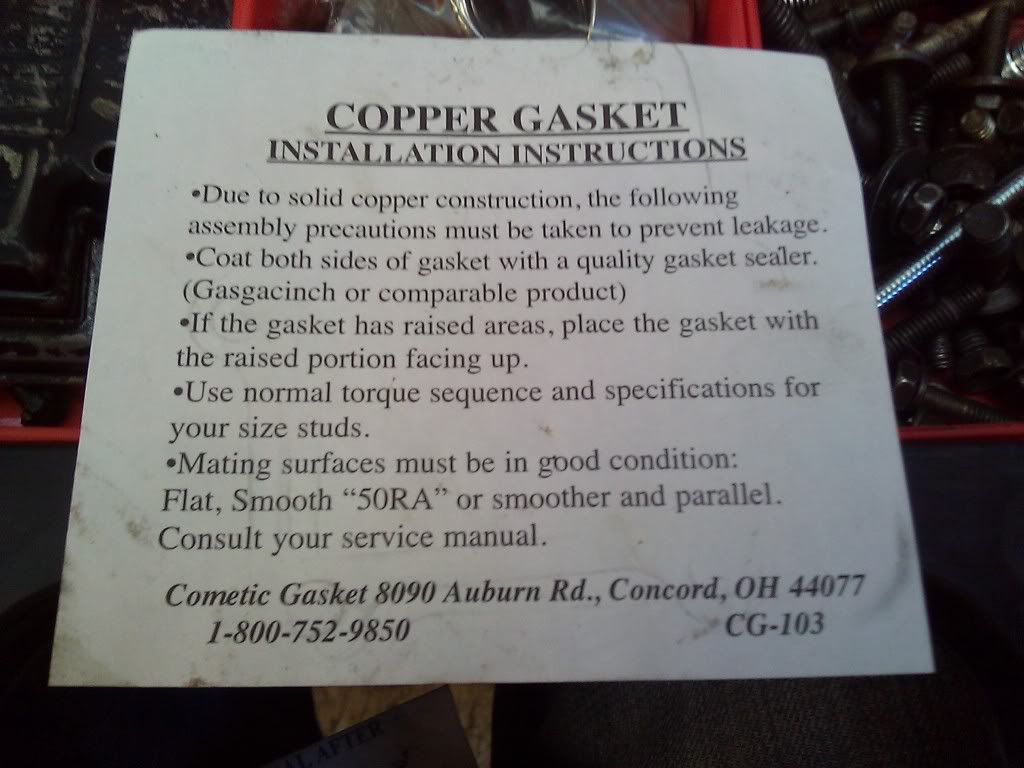
better safe than sorry, my new head gasket on my brand new la sleeve big bore, wouldnt seal unless i put sealer on it, then it passed the leak down test. the instructions said to put the sealer on it also
 
no your wrong your soppused to put some sealer on ALL copper gaskets.

but your right about the base gasket

wrong...no sealer on the base or headgasket, i've done 4-5 in the last 2 years and never had a leak,
and watched ken oconnor in person, and his vids..... no sealants

check page 114/115 of the manual, no where in there do they state, nor recommend any type of sealant on the head or base gaskets

here it is in case anyone doesnt have it

http://www.rydindirty.com/blastermanual.pdf
 
Last edited:
any response from this "builder" yet ????
sounds like some pretty shoddy customer service, on top of finding metal shavings inside a brand new cylinder, possibly a used crank instead of the new one you paid for, and work that was qouted over the phone, paid for, but not listed as being done on the bill ?????

is there a timeline you have for ousting this said builder ????
or are we gonna just let other brothers from here waste their money with this guy ????
 
One of the reasons annealed copper is used for head gaskets is that it requires no sealant. Annealed copper gaskets when torqued correctly will squish into and around imperfections on the mating surfaces.
Once torqued down, (and after conditioning with a few heat cycles), the gasket becomes work hardened. When the engine cools, (due to the tightness of the head bolts,) the gasket will be further compressed and try to force itself even more into imperfections on the mating surfaces.This is the reason for re-torquing head bolts after break in, because the gasket becomes thinner, due to work hardening.
3-5 heat cycles from cold to operating temp, then to cold with a rest in between cycles, 5 is best.

If head gaskets leak it is usually caused by using them more than once, or from poor machining or by re-using components which are warped, and are in need of machining.
Because of poor fit up, sealants are needed to fill the spaces. Sealants are a poor excuse for poor workmanship.

When I went to school the correct procedure to anneal copper it to uniformly heat to cherry red and then quickly immerse in cold water. This will leave scale on the copper, which can be removed taking care not to get the copper too hot.

I would never recommend using a head gasket more than once, unless it is a matter of life and death.

 
One of the reasons annealed copper is used for head gaskets is that it requires no sealant. Annealed copper gaskets when torqued correctly will squish into and around imperfections on the mating surfaces.
Once torqued down, (and after conditioning with a few heat cycles), the gasket becomes work hardened. When the engine cools, (due to the tightness of the head bolts,) the gasket will be further compressed and try to force itself even more into imperfections on the mating surfaces.This is the reason for re-torquing head bolts after break in, because the gasket becomes thinner, due to work hardening.
3-5 heat cycles from cold to operating temp, then to cold with a rest in between cycles, 5 is best.

If head gaskets leak it is usually caused by using them more than once, or from poor machining or by re-using components which are warped, and are in need of machining.
Because of poor fit up, sealants are needed to fill the spaces. Sealants are a poor excuse for poor workmanship.

When I went to school the correct procedure to anneal copper it to uniformly heat to cherry red and then quickly immerse in cold water. This will leave scale on the copper, which can be removed taking care not to get the copper too hot.

I would never recommend using a head gasket more than once, unless it is a matter of life and death.

WP_000638.jpg
 
Some gasket manufactures state to use sealant to cover their butt.
Notice that they state that mating surfaces must be in good condition, and for you to consult your service manual. See Awk's previous post....

I re-state my argument, mating surfaces within tolerance and a good quality annealed copper gaskets require no sealant!